Visualizzazione post con etichetta cascina rosa. Mostra tutti i post

5 marzo 2013

Budino (coppetta) di mele e uvetta - Apple and Raising Pudding - WHB # 374


Il primo dolce vegan e senza zucchero assaggiato a Cascina Rosa  (e probabilmente anche il primo in vita mia :-), preparato dallo chef  Giovanni Allegro.
Riproposto a casa non ha trovato lo stesso apprezzamento di cui ha goduto al corso, ma sapevo già in partenza che sarebbe stata una prova difficile: in effetti non è dolce nel comune senso della parola (se si intende quel tipo di dolcezza data dallo zucchero, bianco o grezzo che sia), ma da qui a bocciarlo completamente ci passa un mare di elucubrazioni sull'interpretazione di dolcezza.
Fatto assaggiare ad altre persone è piaciuto, magari non è propiamente giusto chiamarlo budino (che si associa forse ad una preparazione più dolciastra) ma composta mi dava l'idea della semplice mela cotta da ospedale :-).
E forse l'aver omesso l'uvetta (che qua è sempre guardata con più ostilità che piacere) è stato un pochino controproducente per la sensazione dolce.

Una ricetta che risulta salutare anche per chi deve seguire una dieta speciale, come nel caso dell'endometriosi, della quale si sta celebrando proprio la settimana europea della consapevolezza in questi giorni.

La dose intera della ricetta è abbastanza abbondante, per circa 8/10 coppette.
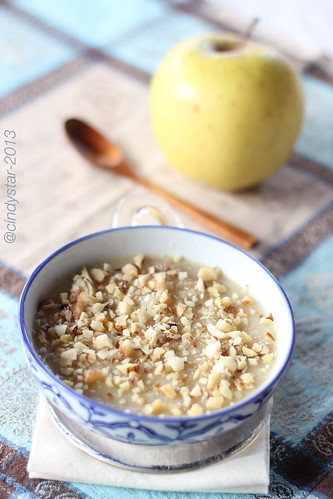

 budino di mele


Ingredienti:

1 litro di succo di mela
3 mele, sbucciate e tagliate a dadini
1 manciata di uvetta, ammollata e strizzata
2 cucchiai di tahin
4 cucchiai di agar-agar in fiocchi
1 cucchiaio di kuzu, sciolto in un goccio di acqua fredda
1 cucchiaino di vaniglia liquida
un pizzico di sale
8/10 frollini al riso/avena/farro senza zucchero *
granella di nocciole/mandorle per guarnire

* scegliere il cereale permesso dalla dieta
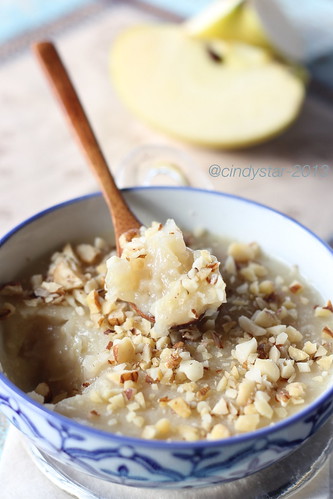

 budino di mele


In una pentola scaldare il succo di mela con il sale, la vaniglia e l'agar-agar.
Quando l'agar-agar è ben sciolto, aggiungere il tahin e l'uvetta e mescolare.
Aggiungere le mele e il kuzu, far riprendere il bollore e cuocere ancora uno o due minuti, sempre mescolando. Togliere dal fuoco e far intiepidire leggermente.
Mettere un biscotto in ogni coppetta e delicatamente versare il composto in ognuna. Lasciare raffreddare e poi conservare in frigo.
Al momento di servire guarnire con la granella di nocciole.


Apple and Raisin Pudding


Probably the first vegan and sugar-free dessert I have ever tasted in my life, prepared by chef Giovanni Allegro at Cascina Rosa, the cooking school about preventive and adjuvant food nutrition of Istituto dei Tumori (Oncological Institute), mostly give help and support to people living with the desease but also to teach how to prevent starting from food.
When I did it at home I knew it was going to be a difficult test for my family: in fact it is not that sort of sweet we are used to (that kind of sugar sweetness, whatever it is, caster or cane), but I was pretty shocked they all refused it.
Maybe we should not call it pudding (that recalls a more sweetish preparation) but as for compote it gave me the idea of traditional baked apple you eat in hospital (at least her in Italy:-).
I have omitted raisins (which here is always looked at with more hostility than pleasure) and perhaps it has contributed to the lack of sweeter sensation.

Full recipe is pretty abudant, about 8/10 cups.
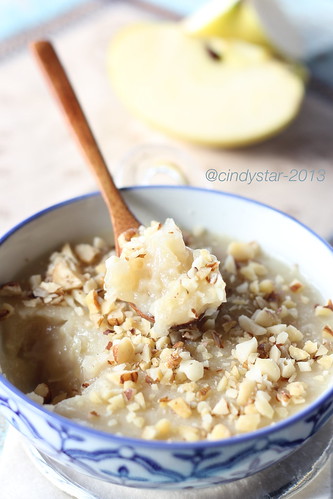

budino di mele


1 liter organic Apple Juice
3 apples, peeled and cut into cubes
1 handful of raisins, soaked and squeezed
2 tablespoons tahini
4 tablespoons agar-agar flakes
1 tablespoon kuzu, dissolved in a dash of cold water
1 teaspoon liquid vanilla extract
pinch of salt
8/10  sugar-free rice/oat/spelt cookies *
finely chopped hazelnuts/almonds for garnish

* according to your diet


Heat apple juice in a saucepan with salt, vanilla and agar-agar.
When agar-agar is dissolved, add tahini and raisins and mix.
Add apples and kuzu, bring to a boil and cook a minute or two, stirring constantly. Remove from heat and let cool slightly.
Place a cookie in each cup and gently pour the mixture into each. Allow to cool and then store in the fridge.
Just before serving garnish with chopped hazelnuts.





whb7
This recipe is my personal entry to WHB # 374
hosted by Simona from Briciole
both for English and Italian edition.
Thanks again to Haalo who manages greatfully all events,
to Bri for Italian edition.
Thanks again to Kalyn for her successfull idea!

22 febbraio 2013

Vellutata di porri e topinambur - Leek and topinambour soup - WHB # 372


scroll down for English version


Ho appena trascorso un bellissimo weekend all'insegna della buona e sana cucina, presso Cascina Rosa, la scuola di cucina preventiva e adiuvante presso l'Istituto dei Tumori di Milano.
Ho conosciuto Giovanni Allegro, uno chef calmo e paziente, specializzato in cucina naturale, che da anni si dedica all'insegnamento in questa struttura e collabora anche con il dipartimento di Scienze biomediche di Torino e Firenze nell'ambito di progetti di ricerca sulla prevenzione dei tumori.
E' affascinante sentire quando parla e spiega i perchè e i come di ogni alimento, le proprietà nutritive e quelle dannose, oltremodo interessante e alle volte sorprendevole come si possa raggiungere un buon livello di cucina senza per questo rinunciare al gusto.
Certo la strada è lunga e molto in salita per chi per anni, per ignoranza e/o golosità, oltre ad una buona dose di miti pubblicitari e/o più o meno pseudomedici da sfatare, si è sempre nutrito e cibato più con la pancia che con la testa. 
Ma iniziando da piccole cose, come una spesa più ragionevole e limitata, saltando a piè pari le infinite corsie tentatrici di cibi iper-raffinati e super-controproducenti, si può cominciare ad allargare i nostri orizzonti foodisti (già il termine allargare presuppone una buone dose di ottimismo, se avessi usato il termine restringere, visto che in ogni caso certi alimenti sarebbe meglio eliminarli o limitarli al minimo, la situazione sarebbe apparsa più negativa e la partenza sarebbe avvenuta col piede sbagliato :-), come per esempio attingere ad ingredienti e metodiche culinarie di altre culture, spesso sconosciute o snobbate per incompetenza.
Ora sto leggendo il suo libro (che mancava alla mia raccolta salutistica dopo i demoni anti-zucchero e antilatte, i due  magnifici libri di Marco Bianchi e il mappazzone China Study (non  ancora finito :-), scelto anche dalla stessa raccolta Salutiamoci come base di partenza per definire la tabella degli alimenti permessi.
Tanta teoria alle mie spalle ma una messa in pratica più difficoltosa, soprattutto per la forte reticenza familiare, ma passin passetto spero di farcela, o perlomeno arrivare ad un punto stabilizzante di inversione di ruoli, dove la quotidianità malsana abituale diventi l'eccezione occasionale.

Questa zuppa ha aperto le danze culinarie del corso seguito a Cascina Rosa e vola dritta da Valentina che questo mese ci ospita con le cipolle, gli scalogni e i porri e tutte le loro proprietà magiche!


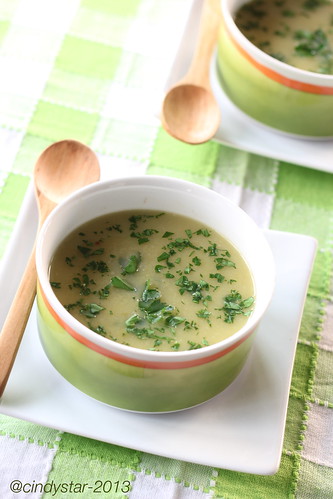
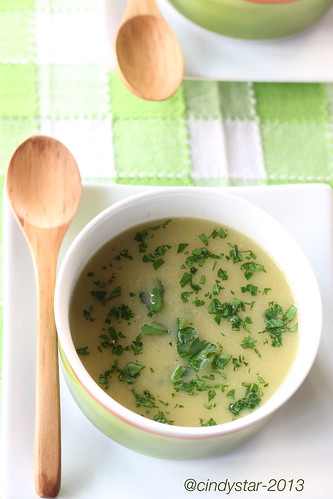
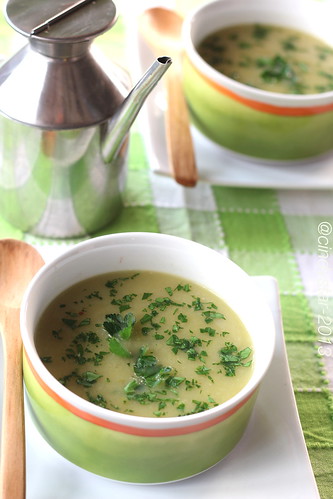
vellutata porri e topinambour


Per 4 persone:

2 porri affettati sottili
4 topinambur a pezzettini
1,5 l di brodo vegetale
(o fatto con dado vegetale homemade)
1 cucchiaio di farina di avena
2 cucchiai di olio extravergine di oliva
1 cucchiaio di miso d'orzo, facoltativo
prezzemolo fresco tritato
sale/pepe


vellutata porri e topinambur


Portare il brodo vegetale a bollore, quindi unire i porri e i topinambur (io non li sbuccio ma li strofino con una paglietta abrasiva sotto l'acqua corrente).
Coprire e cuocere circa mezzora a fuoco moderato.
Sciogliere la farina con un goccio di acqua in una ciotolina ed unirla alla minestra, mescolando bene e continuando a cuocere per altri 10 minuti. Passare al setaccio o frullare.
Sciogliere il miso in un pochino di zuppa calda, aggiungerlo al resto e sobbollire ancora qualche minuto (non l'avevo e non l'ho aggiunto, era comunque buona così, serve ad insaporire e a rendere la zuppa più completa dal punto di vista nutrizionale).
Servire con un filo di olio a crudo e una bella guarnizione di prezzemolo (che ho scoperto faccia molto bene alla nostra salute, non ne ho mai fatto gran uso ma ora lo comprerò più spesso).


 Leek & Topinambour Soup


Topinambour (Helianthus touberosus) is a peculiar winter vegetable cultivated widely across the temperate zone for its tuber, as it's a root vegetables. We can admire at the beginning of Autumn large bushes of this sort of sunflower growing along roads and in the countryside, it's a very rustic and invasive plant.
It 's oddly called Jerusalem Artichoke (and also sunroot, sunchoke, earth apple, French or Canada potato, and lambchoke) although it has nothing to do either with Jerusalem than any sort of artichoke, and Wikipedia gives us more explanations about the origin of the name:

Despite its name, the Jerusalem artichoke has no relation to Jerusalem, and it is not a type of artichoke, though both are members of the daisy family. The origin of the name is uncertain. Italian settlers in the USA called the plant girasole, the Italian word for sunflower, because of its resemblance to the garden sunflower (note: both the sunflower and the sunchoke are part of the same genus: Helianthus). Over time, the name girasole may have been changed to Jerusalem. Another explanation for the name is that the Pilgrims, when they came to the New World, named the plant with regard to the “New Jerusalem” they believed they were creating in the wilderness. The English later corrupted girasole artichoke (meaning, “sunflower artichoke”) to Jerusalem artichoke. There have also been various other names applied to the plant, such as the French or Canada potato, topinambour, and lambchoke. Sunchoke, a name by which it’s still known today, was invented in the 1960s by Frieda Caplan, a produce wholesaler who was trying to revive the plant’s appeal.
The artichoke part of the Jerusalem artichoke's name comes from the taste of its edible tuber. Samuel de Champlain, the French explorer, sent the first samples of the plant to France, noting its taste was similar to an artichoke.
The German version of Wikipedia attributes the name "topinambur" to a 17th century coincidence at the Vatican (in 1615) when a sample of the tuber from Canada was on display, as having helped French Canadian settlers to survive the Winter; at the same time a member of the Brazilian coastal tribe, the Tupinambá, was also visiting. The New World connection evidently resulted in the name for Jerusalem artichoke now used in Spanish, German, Romanian and French.

Last week I was in Milan attending a very interesting full-immersion cooking class with Giovanni Allegro, chef at Cascina Rosa,  the cooking school about preventive and adjuvant food nutrition of Istituto dei Tumori (Oncological Institute).
This soup was the first well-balanced and healthy dish we tasted, easy to do and delicious to enjoy!


vellutata porri e topinambur


Serving 4:

 2 leeks, finely sliced
4 Jerusalem artichokes, diced
1.5 l vegetable broth
(or made with vegetable homemade stock cubes)
1 tablespoon oatmeal
2 tablespoons extra virgin olive oil
1 tablespoon barley miso, optional
chopped fresh parsley
salt/pepper


Bring vegetable broth to a boil, then add leeks and topinambours (actually I do not peel them, just rub with an abrasive kitchen sponge under running water).
Cover and cook about half an hour at moderate heat.
Dissolve the flour with a little water in a small bowl and add to the soup, stirring well and allow  to cook 10 minutes more. Sieve or blend with a mixer.
Dissolve miso in a little  hot soup, add it to the rest and simmer a few minutes (I had not and therefore not added, the soup was good anyway, but miso is useful to season and to make the soup more nutritionally complete).
Serve with a drizzle of oil and a nice garnish of parsley (very health indeed too :-)


whb7
This recipe is my personal entry to WHB # 372
hosted by Terry from Crumpets & Co
both for English and Italian edition.
Thanks again to Haalo who manages greatfully all events,
to Bri for Italian edition.
Thanks again to Kalyn for her successfull idea!

19 febbraio 2013

Black & White Wednesday - Week # 71


Shruthi of Food & Clicks is hosting this week BWW,
please do send your entries to 365sweetmemories AT gmail DOT com


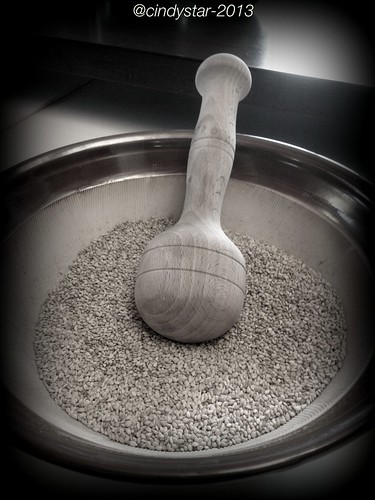
gomashio
 Homemade Gomashio


A Japanese dry condiment, 
made from unhulled sesame seeds (ごま, goma) and salt (塩, shio):
toasted sesame seeds grinded with salt 
in this special bowl called suribachi.

Thanks to chef Giovanni Allegro of Cascina Rosa,
where I spent a very interesting full-immersion weekend
about healthy and natural food and cuisine.


We have a group on Flickr if you'd like to join and share your pics,
  hashtag #BWFood on Twitter.
Should you like to host please send me an email to casacortella AT tin DOT it
rules and host-line up here

Template Design | Elque 2007
