Un'idea panosa natalizia delle sorelle Simili.
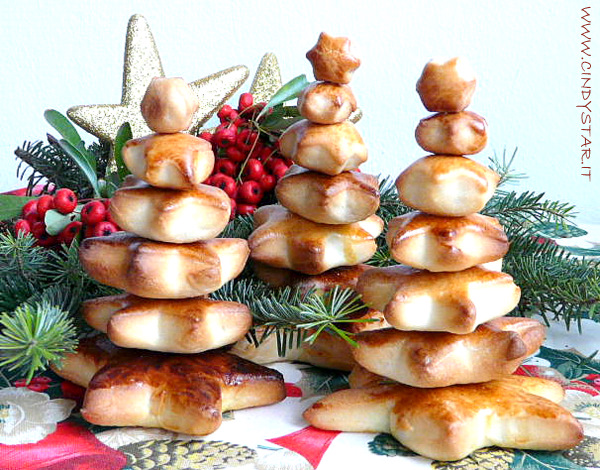
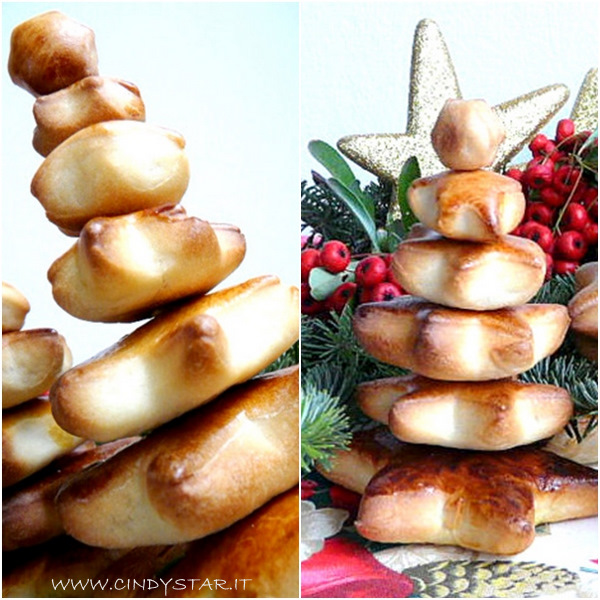
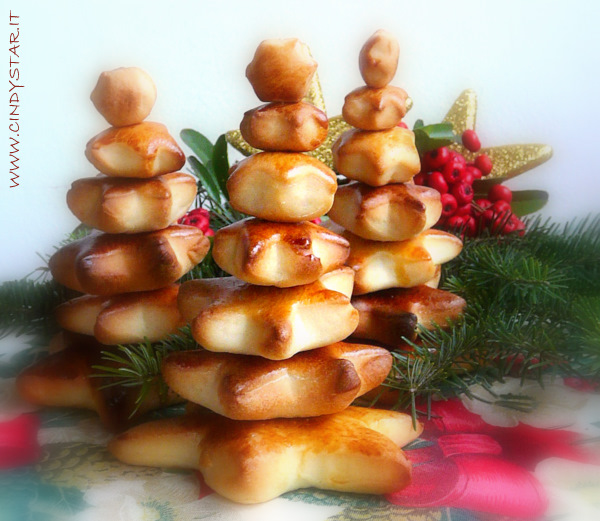
Questi alberelli rallegreranno la tavola nei giorni di festa, possono essere dei simpatici segnaposto o abbellire una ghirlanda o un centrotavola.
Per il fondo:
360 g di farina di forza
240 g di acqua
2 g di lievito
Impastare e far riposare 8/10 ore. In questo modo si otterranno 600g. di lievito in pasta.
Per l'impasto:
300 g di farina di forza
50 g di burro morbido
50 g di olio extravergine di oliva
6 g di lievito
2 cucchiai di zucchero
1 cucchiaino di sale
2 cucchiai di acqua tiepida
6/7 stampini a forma di stella di misura degradante
- In una ciotola mettere l’acqua e fondere il lievito, unire poi il fondo e sciogliere bene.
- Quindi unire il burro quando l’acqua è stata tutta assorbita, poi l’olio, lo zucchero e mescolare fino a che il fondo sarà perfettamente amalgamato.
- Unire la farina, il sale, rovesciare sul tavolo e lavorare 8/10 minuti battendo.
- Mettere in una ciotola unta (di olio o burro) e far lievitare un’ora.
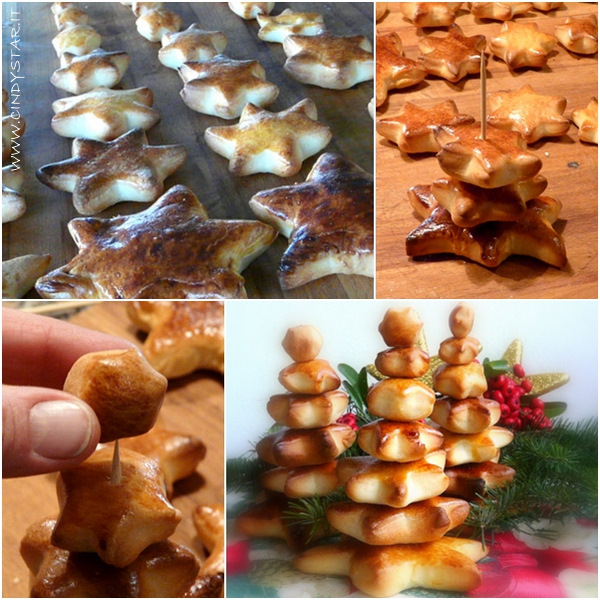
- Rovesciare sul tavolo e senza lavorare tirare una sfoglia di circa mezzo centimetro di spessore e tagliare delle stelle con 6 stampini di misura degradante.
- Adagiare le stelle sulla placca del forno ricoperta di carta forno, spennellare di uovo sbattuto e far lievitare 30/40 minuti.
- Cuocere a 200° per qualche minuto abbassando poi a 180° per 10/15/20 minuti a seconda della misura delle stelle.
- Appena fredde infilarle con uno steccone di legno formando gli alberini e mettere la stella più piccola in piedi (lo stecchino dovrà essere di circa 15 cm.).
Con questa dose vengono all'incirca 10/12 alberini se si sta molto accorti nel non sprecare la pasta mentre si ritaglia. Ho notato che per la miglior riuscita del taglio conviene tenere lo stampo premuto bene sulla pasta con la mano e con l'altra staccare la pasta intorno allo stampo: in questo modo le stelle, specialmente le più grandi, vengono perfette. Il solito sistema dell'appoggiare lo stampo, come sulla frolla, e poi tirare lateralmente la formina sul piano di lavoro non fornisce forme belle ma sbilenche, perchè la pasta è molto elastica e si tira da tutte le parti dando alle stelle forme insolite....lo potete vedere benissimo dalle mie che nella fretta non erano affatto perfette!
Meglio non riimpastare i ritagli per fare le stelle perchè la pasta perderebbe la sua consistenza e un buon risultato non è assicurato.
I ritagli si possono cuocere da soli e diventano un ottimo accompagnamento per un mini aperitivo o per una crema di verdure.
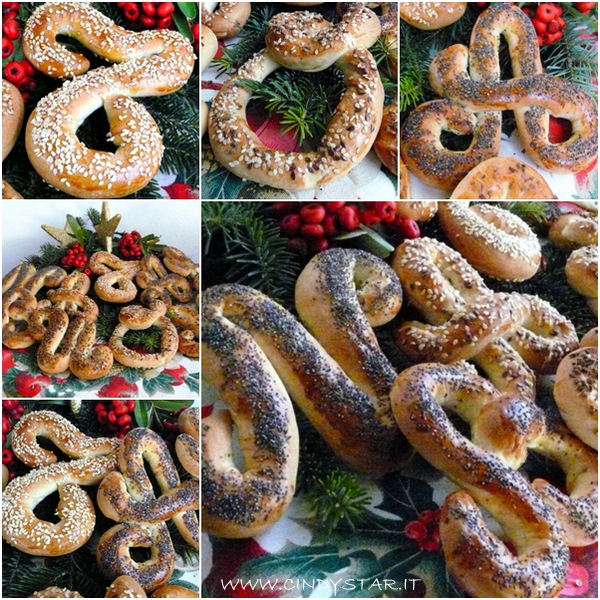
Oppure si possono riunire tra di loro, rimpastarli leggermente e poi formare dei lunghi serpenti con cui sagomare delle lettere: io ho fatto la scritta Buon Natale, ma si potrebbero fare le iniziali dei commensali e con un bel nastrino diventare dei simpatici segnaposto. Le istruzioni su come fare le lettere qui.
Con questo impasto restano morbidi e panosi, ma basta tostarli ulteriormente a 70° per una decina di minuti o poco più per averle più biscottose.
Gli alberelli e le lettere si possono preparare in anticipo tenendoli indietro di cottura di 4/5 minuti. Quando freddi si congelano. Poi si scongelano a temperatura ambiente, si mettono 3/4 minuti in forno caldo per finire la cottura e una volta raffreddati si impilano.

A nice bread decoration for Christmas.
These trees will brighten the table on holidays, can be a nice placeholder or decorate a centerpiece.
Biga:
360 g strong flour
240 g water
2 g fresh yeast
Knead all ingredients together and let rest 8/10 hours. In this way you will get 600 g yeast dough.
Dough:
300 g strong flour
50 g soft butter
50 g extravirgin olive oil
6 g fresh yeast
2 tablespoons sugar
1 teaspoon salt
2 tablespoons warm water
6/7 degrading star-shaped cutters
- In a bowl melt yeast in warm water, then add biga and dissolve well.
- Add soft butter when the water has been absorbed, then oil, sugar and stir until biga will be perfectly blended.
- Combine the flour, salt, and then knead and beat 8/10 minutes.
- Place in a greased bowl (oil or butter) and let it rise one hour.
- Overturn onto the work surface and roll out (without working the dough) in half a centimeter thick and cut out stars with degrading cutters.
- Place the stars on the baking tray covered with greaseproof paper, brush with beaten egg and let it rise 30/40 minutes.
- Then bake at 200° for a few minutes lowering to 180° for 10/15/20 minutes, depending on the size of the stars.
- When cool form the trees placing a wooden skewer (about 15 cm.long) in the middle of the stars and the smallest on top.
This dose will give 10 trees if you are very careful in not wasting the dough while you cut. I noticed that for the best outcome of the cut you should keep the mold on the dough with one hand and with the other pull the dough around the mold: in this way the stars, especially the largest ones, are perfect. Do not place the cutter and pull the star on the working surface as usually done for buiscuits using shortcrust pastry: it will not provide regular but lopsided forms, because the dough is very elastic and will give unusual shaped stars .. .. you can see it well from my own that are not that perfect! Besides better not knead again leftover cuttings for following stars because the dough will lose its texture and a good result is not assured.
But cuttings can be cooked to become a great support to an aperitif or else excellent mini croutons for a vegetable soup.
Or else you can gather them together kneading quickly to combine them and form long snakes to shape letters with: I did Buon Natale (Merry Christmas), but you could do the initials of the diners and they will be nice with a beautiful ribbon as placeholders. Brush with beaten egg and spread different kind of seeds on before baking (I did them last year with another recipe).
With this dough they will remain soft like bread, but just toast again at 70° about 10 minutes or so to have them more crispy.
You can prepare stars in advance if you want to use as edible decoration:
- bake stars 4/5 minutes less
- when cold freeze them
- defrost at room temperature, 3/4 minutes in hot oven to finish baking and when cool form trees as above.







 Post
Post




