8 maggio 2014

Announcing Black & White Wednesday # 129


Happy to announce I will be hosting Black & White Wednesday this week,
you have time to send your entries to casacortella AT tin DOT it
until wednesday 14th May, 8 am Rome time.

The gallery will be on-line in the afternoon. 


new bww logo


A big thank you to all participants and their talented eye,
keeping this event smart and glorious,
with gorgeous galleries of beautiful images every week.

Simply rules to participate here.
There are always hosting weeks available.  
Please contact me at casacortella AT tin DOT it  if you are interested in presenting a gallery.

We also have a group on Flickr if you'd like to join and share your pictures.


boulanger-baking

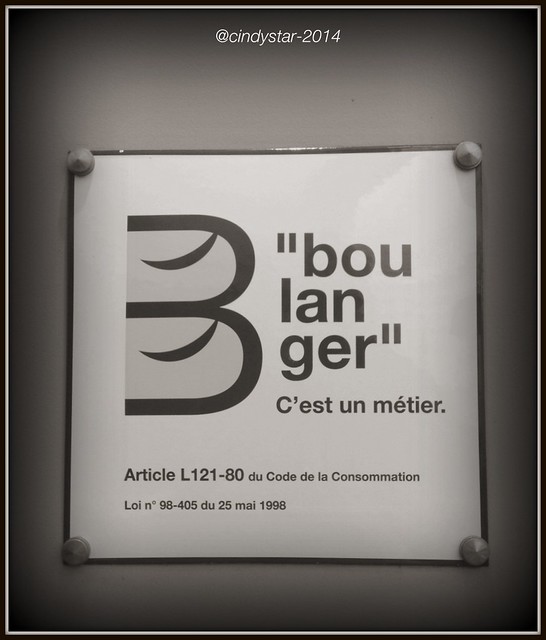
Boulanger c'est un métier - Baking is a job
Seen in Cannes, France.


6 maggio 2014

Black & White Wednesday # 128


Susan of The Well-Seasoned Cook is hosting this week BWW,   
please email your entries to thewellseasonedcook AT yahoo DOT com


strawberries & meringues

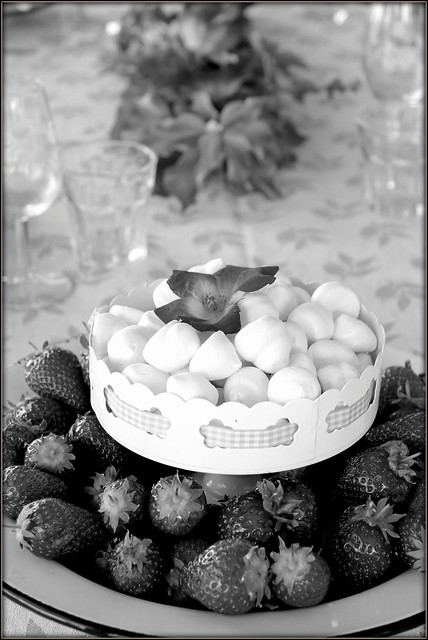
Strawberries & Meringues


here is always a free place to host a week,
check out the host line-up here and sign in for yours
or e-mail me to casacortella AT tin DOT it

We have a group on Flickr if you'd like to join and share your pics,
hashtag #BWFood on Twitter. 

5 maggio 2014

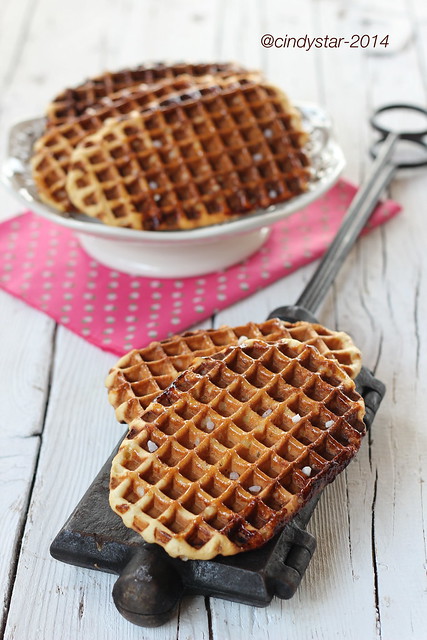
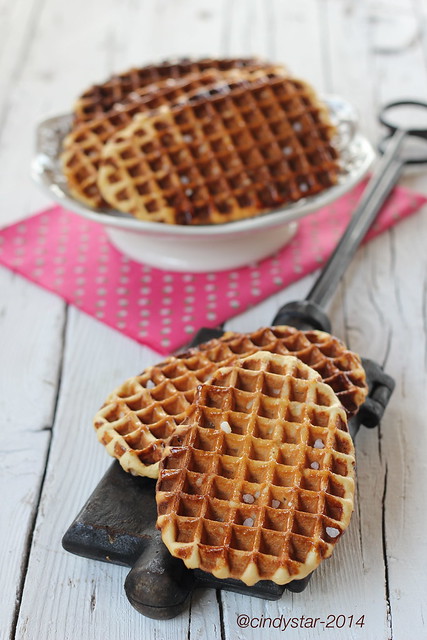
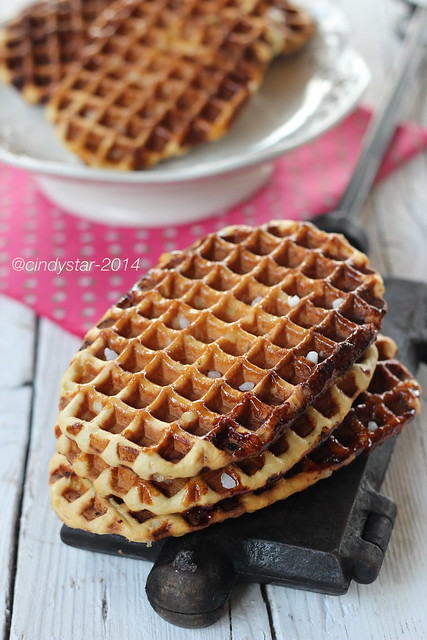
Gauff’ au suc - Les gaufres de Liège - Le cialde di Liegi - Liège Waffles


la ricetta in italiano qui


I simply love (j'adore) French flea markets and when I am there I never miss a single chance to visit one. I love to spend the day putting my eyes on every single stall, trying to find the strangest and oldfest things, it's so relaxing and exciting at the same time!
And then, as I like to be able to use these things properly washed and cleaned thoroughly, thinking who knows how many hands will be used, how much food will be cooked, and how much more will be helpful!
In one of my last tour I found an ancient fer à gaufre at a very cheap price and the temptation was too strong to resist as I never made or ate a waffle in my life! So what better to inaugurate it for our Culinary ABC of the European Community trip in Belgium.


 gaufres de liège


As to wikipedia,  a gaufre/waffle is a leavened batter or dough cooked between two plates, patterned to give a characteristic size, shape and surface impression. There are many variations based on the type of iron and recipe used, with over a dozen regional varieties in Belgium alone.
Waffles are eaten throughout the world, particularly in Belgium, France, Netherlands, Scandinavia, and the United States.
Interesting to read about history and evolution through the centuries, it seems even it was also present in the kitchens of ancient Greece.
The different kind of dough and the variety of models, shapes and motifs of the plates (called challe - waffier - fer à waffles - waffles à moule - gaufrier) shows many variations of waffles exist.
According to the General dictionary of ancient and modern French cuisine, the Gaufre is a native of Brabant province, one of the nine Belgian provinces in 1830, centered on its capital Brussels.

Belgian Waffles are of two types: those in Brussels have a perfectly rectangular outline and a dough made of milk, water, butter, eggs, flour, sugar, yeast and flavoring (often vanilla). They are not very sweet waffle , usually dusted with powdered sugar or served with whipped cream (and/or fruit and ice cream).
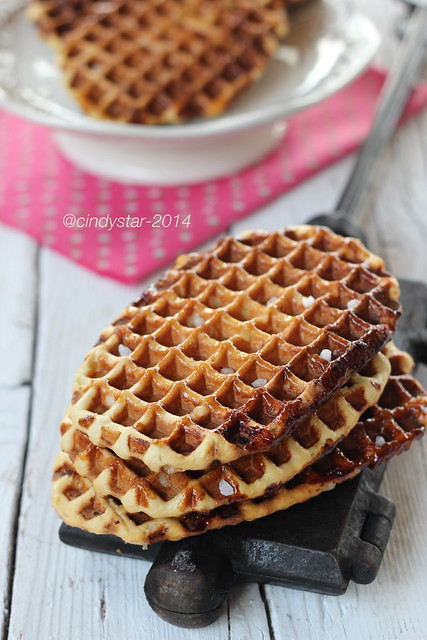
Liège waffles have honeycomb edges, and the dough is made with flour, a few eggs, milk, butter, yeast, a pinch of salt, vanilla sugar and granulated sugar, the characteristic sucre perl , a particular type of sugar very coarse, hard, opaque white, that does not melt at temperatures. They are definitely sweeter than those of Brussels and usually eaten without any accompaniment.
In Belgium waffles are especially welcome as gifts on Sint Maartens Dag, St. Martin's Day , November 11th, served with powdered sugar, syrup, cream, ja , fruit, walnuts, hazelnuts, almonds, chocolate, butter, but also with salty food as fish, cheese, meat.
Brussels waffles are prepared with an egg-white-leavened or yeast-leavened batter, traditionally an ale yeast; occasionally both types of leavening are used together. They are lighter, crisper and have larger pockets compared to other European waffle varieties, and are easy to differentiate from Liège Waffles by their rectangular sides. In Belgium, most waffles are served warm by street vendors and dusted with confectioner's sugar, though in tourist areas they might be topped with whipped cream, soft fruit or chocolate spread. Variants of the Brussels waffles – with whipped and folded egg whites cooked in large rectangular forms – date from the 18th century. However, the oldest recognized reference to Gaufres de Bruxelles (Brussels Waffles) by name is attributed from 1842/43 to Florian Dacher, a Swiss baker in Ghent, Belgium, who had previously worked under pastry chefs in central Brussels. Philippe Cauderlier would later publish Dacher's recipe in the 1874 edition of his recipe book La Pâtisserie et la Confiture. Maximilien Consael, another Ghent chef, had claimed to have invented the waffles in 1839, though there's no written record of him either naming or selling the waffles until his participation in the 1856 Brussels Fair.
Liège Waffle is a richer, denser, sweeter, and chewier waffle, the most famous contemporary Belgian variety.
Native to the greater Wallonia region of Eastern Belgium – and alternately known as gaufres de chasse (hunting waffles) – they're an adaptation of brioche bread dough, featuring chunks of pearl sugar which caramelize on the outside of the waffle when baked. It is the most common type of waffle available in Belgium and prepared in plain, vanilla and cinnamon varieties by street vendors across the nation.
It is said to have been invented in the 18th century by the chef of the prince-bishop of Liège. However, no German, French, Dutch or Belgian cookbook got references in this period and with any denomination, nor are there waffle recipes with the characteristic ingredients of Liège Waffles, the brioche dough and pearl sugar pearl.
Only in 1814 Antoine Beauvilliers publish a recipe in Art du Cuisiner with a brioche dough and sucre cassé (coarse sugar) as topping, not yet mixed in the dough. Antonin Carême, the famous Parisian pastry chef, is the first to incorporate gros sucre in different waffles mentioned in his book Le Maitre d'Hotel Français, 1822. Then, in 1834, Leblanc publishes a complete recipe for waffles grêlées (coarse waffles), where gros sucre is mixed into the dough. But for a complete recipe for Liège Waffles we have to wait until 1921.

 
The French wikipedia page shows as many as 37 types of gaufres with so many different names: interesting and funny to read them all and discover even the smallest differences between them.

 Gauff’ au suc is the name in the local slang.


gaufres de liège


Serving 8 waffles:

300 g all-purpose flour
an egg
half a small glass warm milk
a tsp dry yeast
2 tbs sugar or sugar cane
60 g soft butter
a pinch of salt
2 t liquid vanilla
100 g of granulated sugar (sucre perlé )


gaufres de liège

Soak the yeast in the milk as instructed.
Mix flour with the milk and yeast mixture, egg, sugar, salt and vanilla until everything is well amalgamated, if necessary add a tablespoon of milk. Shape into a ball and let rest covered for half an hour.
Then add the butter, one piece at a time and mix well until well absorbed and the dough is homogeneous, if necessary add a tablespoon of flour.
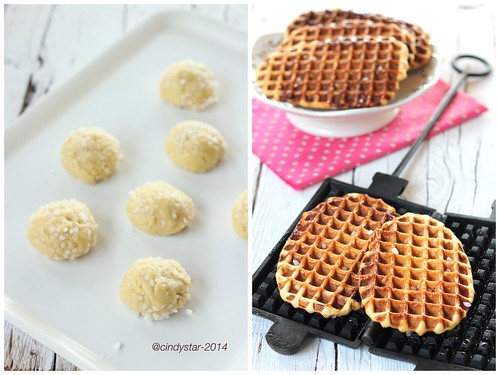
Divide the dough into 8 pieces, weighing about 70/75 g each.
Roll each piece into granulated sugar, gently pressing to get some sugar inside, and roll into small balls. Let rise covered for an hour.
Thoroughly warm up the plate on gas, place a ball of dough onto the chessboard, close the plate and cook a couple of minutes per side, turning the plate.
Easier if you have an electric waffle maker.




This recipe also goes to Susan's weekly YeastSpotting.

4 maggio 2014

Gauff’ au suc - Les gaufres de Liège - Le cialde di Liegi - Liège Waffles


English recipe here


Ultimissimo giorno di permanenza in Belgio con l'Abbecedario della Comunità Europea e allora chiudiamo in bellezza con un dolce tipico di questo paese e per me un'assoluta novità nella mia cucina.
Ma avendo trovato un bellissimo fer à gaufres in uno dei tanti mercatini francesi dove mi piace tanto passare le giornate a frugare e rovistare le cose più strane e vecchie che si possono trovare, così rilassante ed eccitante in ugual modo, quale occasione migliore per inaugurarlo e provarlo una volta a casa. E poi, quanto mi piace poter usare queste cose, debitamente lavate e ripulite a fondo, pensando chissà quante mani le avranno usate, quanti alimenti avranno cucinato, e quanto ancora potranno essere utili!


 gaufres de liège


La Gaufre è un impasto lievitato cotto fra due piastre, con dimensione e forma diversa. Ce sono molte in base al tipo di ferro e ricetta utilizzata, solo in Belgio se ne contano oltre una dozzina di varietà regionali.
Queste cialde sono mangiate tutto il mondo, in particolare in Belgio, Francia, Paesi Bassi, Scandinavia e Stati Uniti.
Interessante leggere la loro storia ed evoluzione attraverso i secoli, pare addirittura fossero presenti anche nelle cucine dell'Antica Grecia.
I diversi tipi di paste utilizzate e la diversità dei modelli di forma e motivi delle piastre (chiamati challe - waffier - fer à gaufre - moule à gaufre - gaufrier) fan sì che esistano moltissime varianti di gaufres.
Secondo il Dizionario generale della cucina francese antica e moderna, la Gaufre è originaria della provincia di Brabant, una delle nove province belghe del 1830, incentrata sulla sua capitale Bruxelles.

Le Gaufre del Belgio sono di due tipi diversi: quelle di Bruxelles hanno un contorno perfettamente rettangolare e un impasto a base di latte, acqua, burro, uova, farina, zucchero, lievito di birra e aromi (spesso vaniglia). Sono delle gaufre poco dolci, solitamente spolverate con zucchero a velo o servite con della panna montata (e/o frutto e gelato). Le Gaufre di Liegi hanno contorno smussato, a nido d'ape, e impasto a base di farina, poche uova, latte, burro, lievito di birra, un pizzico di sale, zucchero vanigliato e zucchero in grani, il caratteristico sucre perlé, un tipo particolare di zucchero, a forma di perle appunto, che non si scioglie nell'impasto (più solido del nostro zucchero in granella). Sono gaufre decisamente più dolci di quelle di Bruxelles e si mangiano solitamente senza accompagnamento.
In Belgio sono particolarmente gradite come doni in occasione del Sint Maartens Dag, cioè del giorno di San Martino, l'11 novembre. Si accompagnano a zucchero a velo, sciroppi, panna, marmellata, frutta, noci, nocciole, mandorle, cioccolata, burro, ma anche al salato  come pesce, formaggio, carne (da wikipedia).
Ci sono traccie di varianti delle cialde di Bruxelles - con albumi montati a neve e poi piegate e cotte in grandi forme rettangolari - già nel 18° secolo. Tuttavia, il più antico riferimento riconosciuto per le Gaufres de Bruxelles così nominate  è attribuito nel 1842 a Florian Dacher, un fornaio svizzero della cittadina di Gand, in Belgio, che aveva già lavorato come aiuto pasticcere nel centro di Bruxelles. Philippe Cauderlier ha poi pubblicato la ricetta di Dacher nell'edizione del 1874 del suo libro di ricette La Pâtisserie et la Confiture.  Maximilien Consael, un altro pasticcere di Gand, ha dichiaratoin seguito di aver inventato lui le gaufres nel 1839, anche se non c'è alcuna traccia scritta di lui o della vendita di queste cialde fino alla sua partecipazione alla Fiera di Bruxelles  1856 (da wikipedia).
La Gaufre di Liegi, la più famosa varietà belga contemporanea, si dice sia stata inventata nel 18° secolo dallo chef del principe vescovo di Liegi. Tuttavia, non esiste nessun libro di cucina tedesco, francese, olandese o belga che ne riportino riferimenti in questo periodo e con qualsiasi denominazione, né ci sono ricette di cialde che riportano gli ingredienti caratteristici della Gaufre di Liegi, la pasta brioche e lo zucchero perlato. E' solo nel 1814 che Antoine Beauvilliers pubblica una ricetta nell'Art du Cuisiner in cui la  pasta brioche è introdotta come base per le gaufres e il sucre cassé (zucchero in scaglie) è usato come guarnizione per le cialde, anche se non ancora mescolato alla pasta. Antonin Carême, il famoso pasticcere parigino, è il primo a incorporare il gros sucre in diverse varianti di cialda citati nella sua libro del 1822, Le Maitre d'Hotel Français. Poi, nel 1834, Leblanc pubblica una ricetta completa per gaufres grêlées (cialde ), dove il gros sucre è mescolato nell'impasto. Ma una ricetta completa di Gaufre de Liège non appare fino al 1921 (da wikipedia).

La pagina francese di wikipedia sulle gaufres ne riporta ben 37 tipi con altrettanti nomi diversi: interessante e simpatico leggerle tutte e scoprire così anche le più piccole differenze tra una e l'altra.

Gauff’ au suc è il nome nel dialetto locale.

Per la ricetta mi sono affidata ad un Cavolo di ricetta, essendo lei belga doc, anche se ora forse più italiana e americana :-)
Confrontandola con altre ricette sul web, mi sono permessa di aggiungere un uovo all'impasto, per renderlo appunto più simile ad una pasta brioche.
Ed in Francia ho trovato il sucre perlé, una granella di zucchero più spessa e corposa della nostra.


gaufres de liège


Ingredienti per 8 gaufres:

300 g di farina 0
un uovo
mezzo bicchiere scarso di latte tiepido
un cucchiaino di lievito secco per torte salate
2 cucchiai di zucchero, anche di canna
60 g di burro morbido
un pizzico di sale
2 cucchiaini di vaniglia liquida
100 g di zucchero in granella (sucre perlé)


gaufres de liège


Far rinvenire il lievito nel latte come da istruzioni.
Impastare la farina col latte e lievito, l'uovo, lo zucchero, il sale e la vaniglia finchè tutto è ben amalgamato, se necessario aggiungere un cucchiaio di latte. Formare una palla e lasciare riposare coperta sul piano di lavoro per mezzora.
Aggiungere poi il burro, un pezzetto alla volta ed amalgamare bene finchè ben assorbito ed amalgamato, se necessario aggiungere un cucchiaio di farina.
Dividere l'impasto in 8 pezzetti, del peso di circa 70/75 g cadauno.
Rotolare ogni pezzetto nella granella di zucchero, facendola aderire bene, anche all'interno, e formare delle palline. Lasciarle lievitare coperte per un'ora.
Riscaldare bene il ferro sul gas, adagiare un panetto di impasto su una scacchiera, chiudere il ferro e cuocere un paio di minuti per parte, rigirando il ferro.

Per chi avesse le piastre elettriche, giustamente come mi aveva fatto notare Simona, niente di più facile, perchè la temperatura è più facilmente controllabile. Basta riscaldare bene la piastra, adagiare il panetto di pasta, chiudere e cuocere.
L'unica avvertenza è la misura della piastra, il mio ferro misura 11x18 e quei panetti sono perfetti, in caso fosse più grande o più piccola occorrerà diviere l'impasto in proporzione.


This recipe is my personal entry to WHB #431
hosted by Terry from Crumpets & Co
both for English and Italian edition.
Thanks again to Haalo who manages greatfully all events,
to Bri for Italian edition.
Thanks again to Kalyn for her successfull idea!

29 aprile 2014

Black & White Wednesday # 127


Sreevalli of Ammaji Recipes is hosting this week BWW,   
please email your entries to valli.sunil AT gmail DOT com


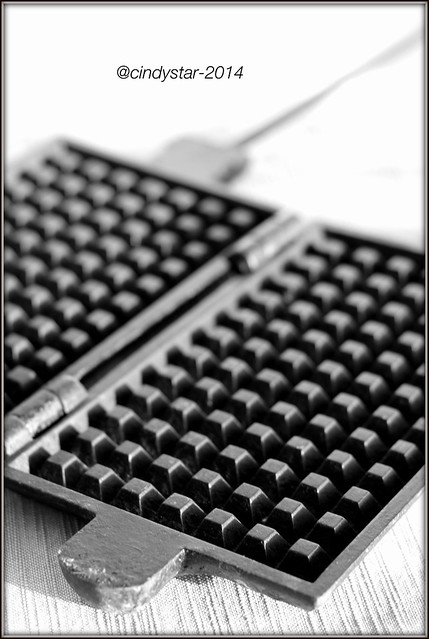
Looks like chocolate but ...

gaufrier

... it's a Gaufrier en fonte ancien, an old Iron Waffle Maker :-)


here is always a free place to host a week,
check out the host line-up here and sign in for yours
or e-mail me to casacortella AT tin DOT it

We have a group on Flickr if you'd like to join and share your pics,
hashtag #BWFood on Twitter. 

Template Design | Elque 2007