30 giugno 2014

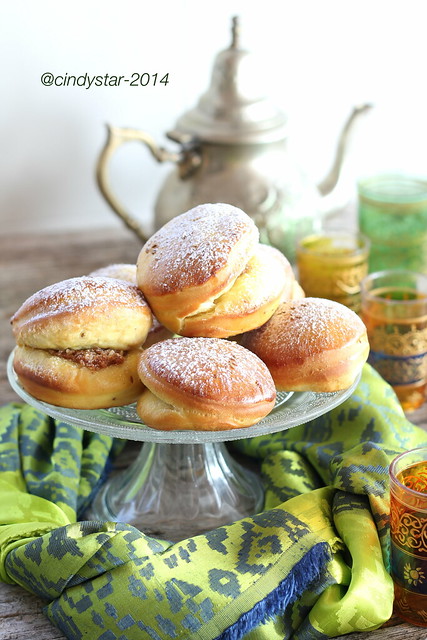
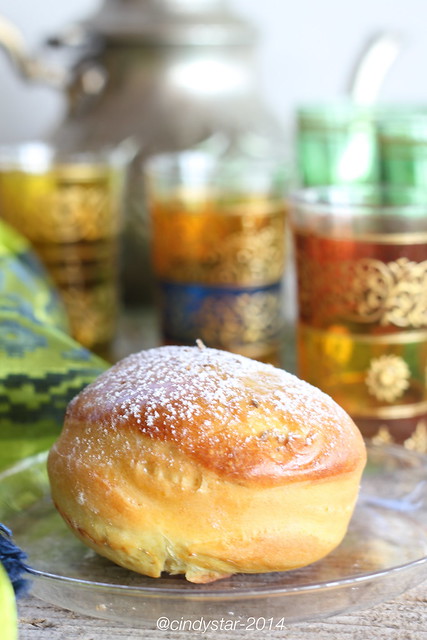
Peanut Panettone Buns for MLLA # 72


 la ricetta in italiano qui


I found this recipe on an Italian food magazine, a special edition about gourmet homemade gifts, and this bread cought my attention at first glance.
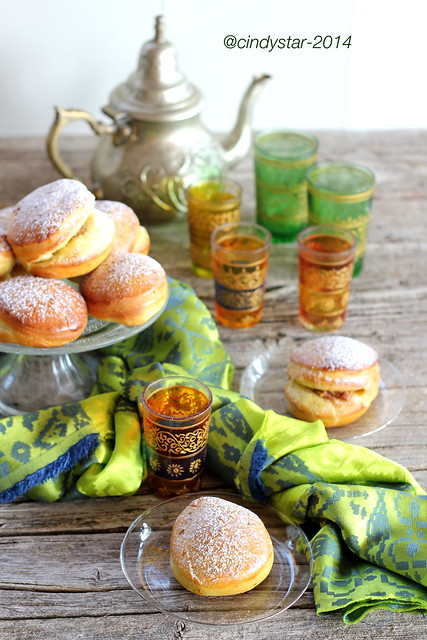
The result was over my expectations, can't say if it's more savoury or sweet, just an incredible mix of both. The shape is very cute and could be used as placeholders on a festive table.
Definetely a lovely bread to enjoy at breakfast, with the right incentive help to face any work or duties of our long busy days.


panettoncini arachidi-peanut buns


You need:


500 g all-purpose flour
150 g salted peanuts
250 ml lukewarm milk
10 g fresh yeast
1 egg
2 egg yolks
75 g soft butter into small pieces
50 g sugar cane
5 g salt

for the glaze:

50 g finely chopped salted peanuts
2 egg whites
25 g grated Parmesan cheese


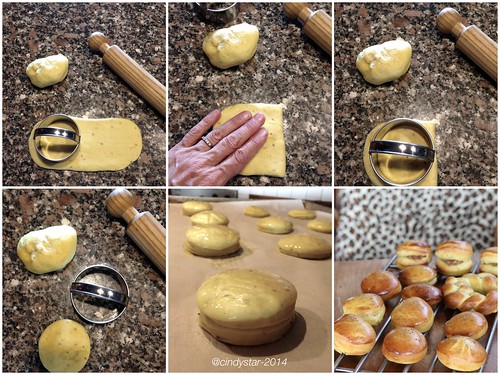
facendo panttoncini arachidi


Dissolve the yeast in the milk.
Coarsely chop the peanuts and add them to the flour.
In a bowl begin to knead the flour with peanuts along with the mix milk/yeast little by little using a fork, then add the egg and egg yolks, lightly beaten .
Combine sugar and salt, and transfer to the working surface, add the butter too, and knead and beat until the dough is elastic, smooth and homogeneous.
All this work can be easily in a stand mixer.
Shape the dough into a ball and let rest covered for half an hour.
Divide the dough into little balls weighing approximately 50 g each and place them on a baking sheet lined with parchment paper; leave enough space between them as they will grow in cooking too, then cover and let rise until doubled (even a couple of hours).
It will be nicer using a baking muffin mold tin (slightly oiled), they will get the typical panettone shape.
Prepare the glaze by mixing all the ingredients together.
Use a pastry bag (but I went with a spoon and a finger to spread) to distribute a little bit of frosting on each bun.
Bake at 220° for a couple of minutes then low to 200° for about 15/20 minutes, pay attention to cooking time,  if they get golden too much and/or too fast, cover with aluminum foil and bake a few minutes less.


panettoncini arachidi-peanut buns


This recipe goes to Susan of The Well-Seasoned Cook who's hosting MLLA # 72,
the monthly event about legumes she launched in January 2008
and now run by lovely Lisa of Lisa's Kitchen.

28 giugno 2014

Announcing Black & White Wednesday # 136


Happy to announce I will be hosting Black & White Wednesday this week,
you have time to send your entries to casacortella AT tin DOT it
until wednesday 2nd July, at noon Rome time.
The gallery will be on-line in the afternoon. 

Simply rules to participate here.
There are always hosting weeks available.,
at the moment Week # 138 July 16  and Week # 139 July 23 are still free.
Please contact me at casacortella AT tin DOT it  if you are interested in presenting a gallery.

BWW will go on a Summer break after Week # 140 July 30 and resumed in September, 3rd.


IMG_4994

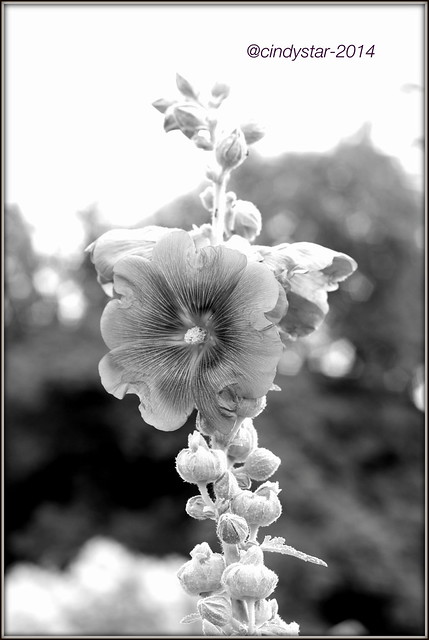
Spontaneous Malva in my garden


Malva is a genus of about 25–30 species of herbaceous annual, biennial, and perennial plants in the family Malvaceae (of which it is the type genus), one of several closely related genera in the family to bear the common English name mallow.
The word mallow is derived from Old English malwe, which was imported from Latin malva, cognate with Ancient Greek μαλάχη (malakhē) meaning mallow, both perhaps reflecting a Mediterranean term.
Several species are widely grown as garden flowers, while some are invasive weeds, particularly in the Americas where they are not native.
Many species are edible as leaf vegetables. Known as ebegümeci in Turkish, it is used as vegetable in Turkey in various forms such as stuffing the leaves with bulgur or rice or using the boiled leaves as side dish. Malva verticillata (Chinese: 冬寒菜; pinyin: dōngháncài, Korean: 아욱 auk) is grown on a limited commercial scale in China; when made as a herbal infusion, it is used for its colon cleansing properties and as a weight loss supplement.
Very easily grown, short-lived perennials often grown as ornamental plants. Mild tasting young mallow leaves can be a substitute for lettuce, whereas older leaves are better cooked as a leafy green vegetable. The buds and flowers can be used in salads.
Cultivation is by sowing the seeds directly outdoors in early spring. The seed is easy to collect, and they will often spread themselves by seed.
In Catalonia (Southern Europe) they use the leaves to cure stinging nettles sting.
Bodo tribals in Bodoland, Assam (Northeast India) cultivate a sub-species of malva and use it extensively in their traditional cuisine, although its use is not much known among other people of India. Malva Leaves are a highly cherished vegetable dish in north Indian state of Kashmir. It is called Soachal.
Malva sp. leaves have been used in the traditional Austrian medicine internally as tea or externally as baths for treatment of disorders of the skin, gastrointestinal tract and respiratory tract.
This plant is one of the earliest cited in recorded literature. Horace mentions it in reference to his own diet, which he describes as very simple: "Me pascunt olivae, me cichorea, me malvae" (As for me, olives, endives, and mallows provide sustenance). Lord Monboddo describes his translation of an ancient epigram that demonstrates malva was planted upon the graves of the ancients, stemming from the belief that the dead could feed on such perfect plants (from wikipedia).


 new bww logo


We also have a group on Flickr if you'd like to join and share your pictures.

25 giugno 2014

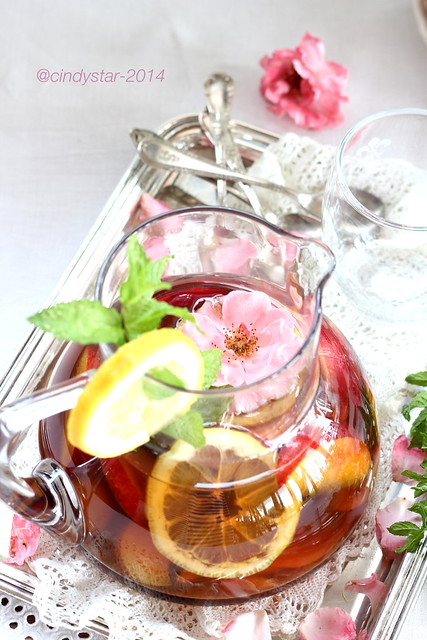
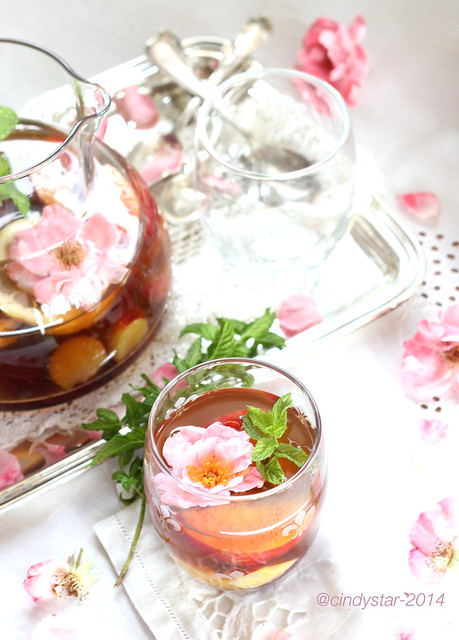
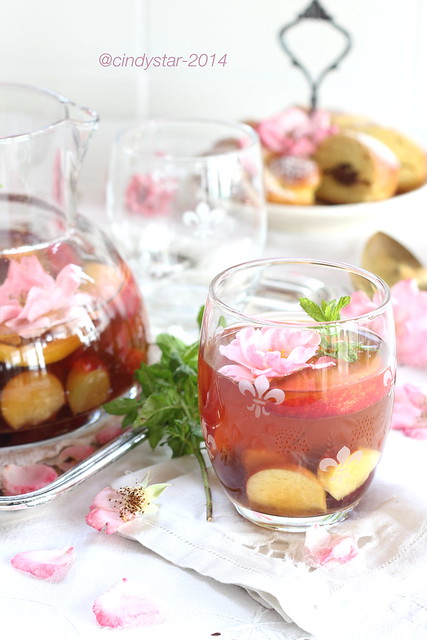
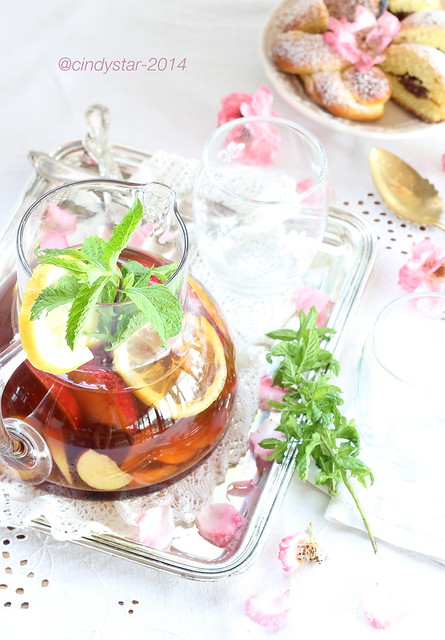
Teatime volubile profumato alla rosa, menta, vaniglia e bergamotto


Mi è piaciuto subito il nome: Volubilis.
Mi è piaciuta subito la sua definizione: un viaggio di sensi.
E sono sicura mi piacerà anche il suo profumo, quando tornerò a Bologna a trovare Sabrina mi sconvolgerò l'olfatto.
E proprio Sabrina, in onore di questa nuova fragranza creata da Bruno Acampora, ha lanciato il contest per la realizzazione di una ricetta utilizzando uno o più ingredienti che compongono l'essenza:


la rosa del marocco
la menta piperita
il bergamotto
il muschio
la vaniglia 
il patchouli


Certo non è facile trasferire in cucina muschio e patchouli, e a onor del vero non ci ho nemmeno provato. Ma si poteva giocare più comodamente con gli altri profumi, e perchè non unirli insieme?
Ho la profumatissima rosa mia preferita Clair Matin in giardino, la menta in tutte le sue espressioni più frizzanti che cresce vigorosa in ogni dove, la vaniglia del Madagascar in bacche nel suo grande vaso in dispensa, dovevo solo trovare il bergamotto.


té speziato alla frutta


Estate, tempo di bevande dissetanti, tempo di tè freddo.
E il bergamotto si nasconde in una delle miscele di tè più amate e bevute al mondo, l'Earl Grey, che viene aromatizzato con l'olio estratto dalla scorza di questo agrume.

Rovistando tra le mie preziose scatole di tè (ne ho appena fatto scorta), ho trovato una miscela ancora più intrigante ed adeguata: Prince Vladimir della Kusmi Tea.
Una miscela di tè neri cinesi con aroma di bergamotto, limone, pompelmo, vaniglia e spezie, un mix unico, creato da Pavel Kusmichoff nel 1888 per celebrare il 900° anniversario della cristianizzazione russa da parte di Vladimir il Grande.
Interessante leggere la storia centenaria di questa grande famiglia russa che fece la sua fortuna commerciando tè a Londra, Parigi e Berlino.


 té speziato alla frutta


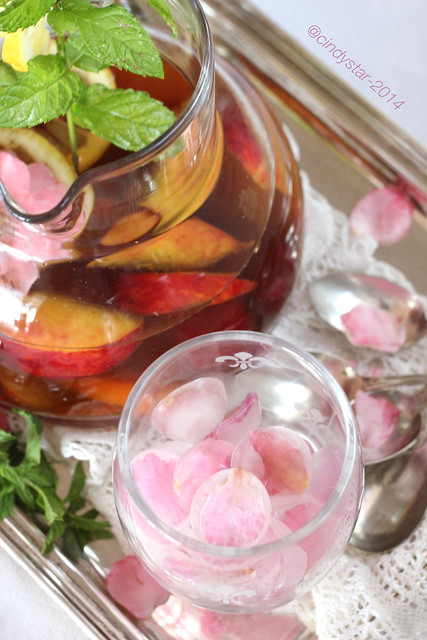
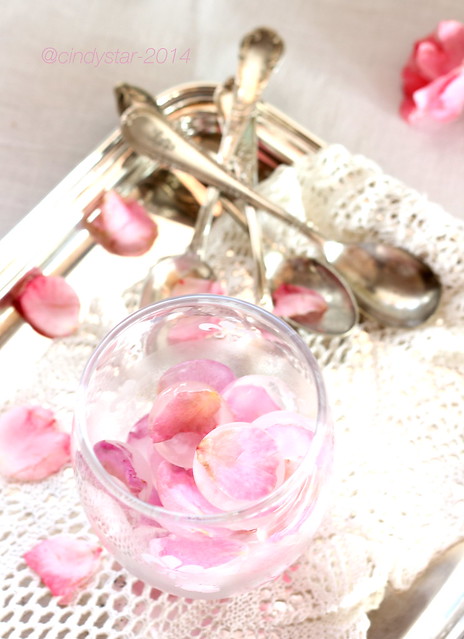
Con i petali di rosa si possono fare i cubetti di ghiaccio, per guarnire con più garbo e delicatezza, quasi a rievocare momenti di dolce far niente all'ombra di gazebi lussureggianti d'altri tempi.

Riempire a metà la vaschetta portaghiaccio, mettere in ogni stampino un petalo di rosa, fare rassodare in freezer, ricoprire con altra acqua e far rassodare ancora. Si possono poi conservare in un barattolo di plastica o in un sacchetto.
Non avendo le vaschette portaghiaccio, ho utilizzato uno stampo in silicone per semisfere.


té speziato alla frutta


 Tè freddo speziato alla frutta


 tè Earl Grey oppure Prince Vladimir
bergamotto o limone o lime
frutta di stagione
(nettarina, albicocca, ciliegie, pesca saturnina)
zucchero alla vaniglia *
(semolato o di canna)
bacca di vaniglia
menta fresca
petali di rosa profumata


* dopo aver usato i semini interni della vaniglia, non getto mai le bacche ma le ripongo nel vaso dello zucchero, sia semolato che di canna: in poco tempo acquisterà un delicato aroma vanigliato.


té speziato alla frutta


Portare l’acqua a 90°.
Lasciare il tè in infusione per 3 o 4 minuti, con coperchio.
Filtrare, aggiungere un cucchiaio di zucchero vanigliato, mescolare e lasciare raffreddare.
Nel frattempo tagliare la frutta a piccoli spicchi (le ciliegie si lasciano intere), riunirla in una bacinella, cospargere con un cucchiaio di zucchero vanigliato, aggiungere i semini e la scorza di un pezzettino di bacca di vaniglia, un paio di cucchiai di succo di limone e mescolare. Coprire e mettere da parte.
Quando il tè è quasi completamente raffreddato, versarlo sopra alla frutta, mescolare e trasferire in una caraffa. Aggiungere qualche foglia di menta, leggermente sfregata tra le mani per ravvivare l'aroma. Eventualmente aggiustare di zucchero se piace più dolce.
Servire con i cubetti di ghiaccio alla rosa.

Oggi pomeriggio un'ottima merenda insieme ai Komaj, panini persiani alla curcuma e cumino, ripieni di datteri profumati al cardamomo: un ensemble quasi paradisiaco, un'esplosione di sensi e di gusto!


té speziato alla frutta


petali di rosa ghiacciati


Komaj - Persian Turmeric and Cumin Bread


So glad to be back again baking with Aparna of My Diverse Kitchen's group We Knead to Bake.
For this month the challenge was about Komaj, a Persian turmeric and cumin bread filled with chopped dates and cardamom flavored. 
This sweet and savoury bread is usually served with tea, but I suppose it will nicely fit on a Sunday Brunch. The recipe is taken from Greg and Lucy Malouf’s book, Saraban – A Chef’s Journey Through Persia, and here’s what they have to say about Komaj:

This is our interpretation of a wonderful savoury–sweet bread we tasted in the oasis town of Mahan in the south-east of Iran. Cumin is grown in abundance in the region and is used to flavour many of the local dishes, often in combination with turmeric.

In Iran they usually cut Komaj into heart shaped buns because but for the first time I ant for an easier round shape, and this dough has three rises instead of the usual two.
I was very surprised of the lovely flavor and aroma of this bread, do give a try because the combination of turmeric, cumin and dates is really a good one and worth experiencing: in case you are still doubting, just halve the amount of spices.
The dates to be used are the dehydrated ones that are still a little soft, and can be sliced through easily with a knife.


komaj-persian bread


Komaj
(Persian Date Bread With Turmeric & Cumin)

recipe adapted from Saraban – A Chef’s Journey Through Persia by Greg & Lucy Malouf


komaj-persian bread


Ingredients for about 12 buns:

Dough:

1 tsp active dried yeast
1/8 cup warm water
3 3/4 cups bread flour (or all-purpose flour)
2 1/2 tsp cumin seeds, toasted and lightly crushed
1/4 cup sugar
1/2 tsp turmeric powder
1/2 to 3/4 tsp salt
1 egg
1 cup warm milk
1 1/2 tbsp olive oil


Filling:

12 to 15 dried dates, pitted and cut into chunks (the slightly soft kind)
25 gm unsalted butter, soft at room temperature
4 to 5 pods cardamom, powdered


milk/cream/beaten egg for brushing 
icing sugar, for dusting (optional)


Dissolve the yeast in the warm water and keep it aside for 10 minutes and it will have bubbled up a little.
Put the flour, 2 tsp of the crushed cumin, sugar, turmeric and salt in the bowl of your food processor and run a couple of times to mix. Then add the yeast mixture and the egg and run the processor again, till it is incorporated.
Now add the milk and olive oil, and knead until you have a smooth and pliable dough that’s not sticky. Shape the dough into a ball and place in a well-oiled bowl, turn to coat the dough and then cover loosely and let it rise till it has doubled (about an hour or so).

When the dough has risen, deflate it and then shape into a round. Put it back in the bowl for a second rise till it has doubled (an hour or so).
In the meanwhile prepare the filling by mixing together the chopped dates, soft butter and cardamom together in a bowl.


making komaj


Divide the dough in to 4 equal portions, and divide each in half so you have 8 portions. 
Working with one portion at a time, roll each one out into a rectangle that is about between 1/4" and 1/8” thick. Choose a cookie cutter that is about 8cm at the widest. Press it down lightly in one half of the rectangle to guide you to put the filling.
Brush a little water over the entire surface to make sure the dough would stick well when folded over.
Then place about 1 tsp (more than this is not necessary) in the centre of the cookie outline and then fold the other half of the rectangle over the filling so that it’s now a covered square. Using the cookie cutter cut, with the filling in the centre, cut out the bun making sure the sides are neat and well sealed. If the sides are not well sealed, the bun will swell and open up during baking. It will taste good but look weird (that happened to me, even though I thought I did everything allright, and some buns looked like smiling frogs :-).

Repeat with the remaining portions of dough, then reroll the scraps and you should be able to make two more buns making a total of 10 buns (for me more, because my first buns were too much thin). Place them on a lightly greased baking tray leaving space between them because they will puff up on baking. Let them sit for about 15 minutes.

Then brush them with a little milk (or egg wash if you use it) and sprinkle the remaining ½ tsp of crushed cumin on top, pressing it down a little with your fingers. Bake the Komaj at 200C (400F) for about 8 to 10 minutes.
Let them cool on a rack a little and dust with icing sugar if you like. 
Serve them warm with tea or coffee. These are best eaten the day they’re made. Leftovers can be reheated and eaten the next day, kept in an airtight box.


komaj-persian bread


 Bread Baking Day #69 - Regionale Brote / Local breads (last day of submission Juny 1st, 2014)

This recipe goes to Der Gourmet  who's hosting BDD #69,
the montlhy bread event created by Zorra.


This recipe also goes to Susan's weekly YeastSpotting.


24 giugno 2014

Black & White Wednesday # 135


Sreevalli of Ammaji Recipes is hosting this week BWW,
please  send your entries to valli.sunil AT gmail DOT com


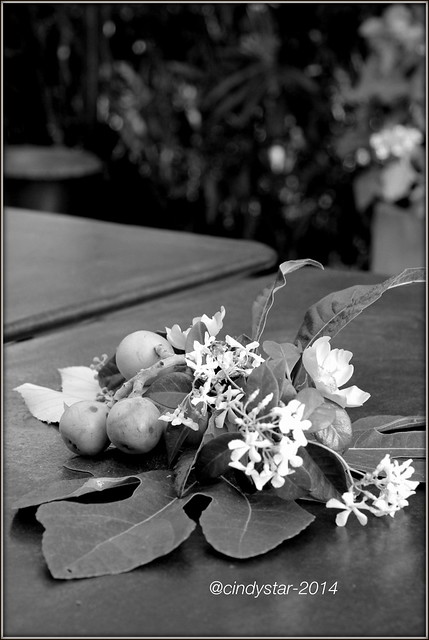
summer centerpiece
Summer Centerpiece

made with fig leaves,
loquats,
 trachelospermum jasminoides,
 hypericum perforatum.


There is always a free place to host a week,
check out the host line-up here and sign in for yours
or e-mail me to casacortella AT tin DOT it

We have a group on Flickr if you'd like to join and share your pics,
hashtag #BWFood on Twitter. 

Template Design | Elque 2007